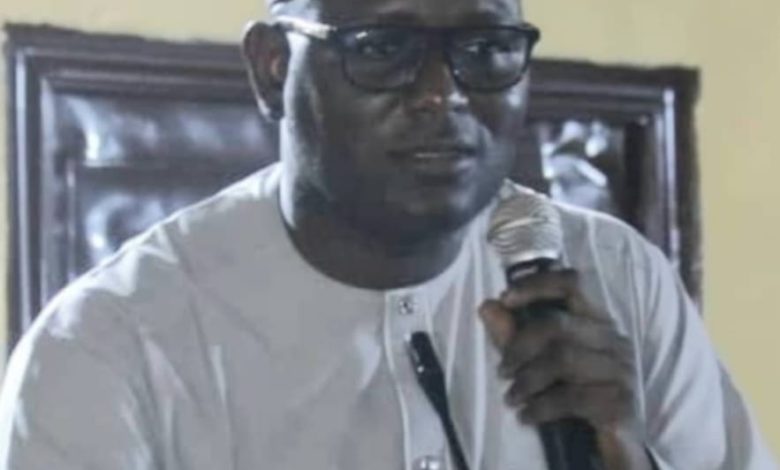
In a deliberate move to strengthen transparency, trust and collaboration, the Nigeria Customs Service (NCS), Zone ‘A’, on Friday December 19th hosted an End-of-Year Media Parley that brought together senior public relations officers of the Service and leading journalists from Lagos and Ogun under one roof in Lagos.
The media parley held at the Customs Training College, Ikeja, evolved beyond a routine engagement into a frank, reflective and forward-looking conversation on how Customs–media relations can be deepened in year 2026.
The gathering provided a rare opportunity for journalists who have, over decades, chronicled Customs’ achievements, scrutinised its operations and constructively challenged its policies, to engage directly with the Service in an atmosphere of openness and mutual respect.
Opening the parley, the Public Relations Officer of Zone ‘A’, Chief Superintendent of Customs (CSC) Akaninyene Edeminam, described the media as an indispensable partner in the execution of Customs’ mandate.
He said the presence of maritime journalists underscored a long-standing relationship built on transparency, accountability and a shared responsibility to keep the public well informed.
According to him, the end-of-year engagement was designed to review past interactions, assess progress and exchange ideas for a stronger working relationship in the year ahead, noting that the Nigeria Customs Service recognises the media as a critical stakeholder in national development.
Goodwill messages from journalists reflected both appreciation and constructive criticism.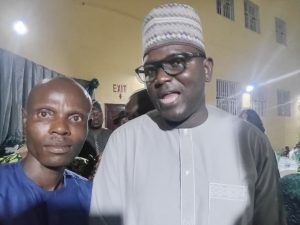
Comr. Orishabuyi Oluwafemi and National PRO, DC Abdullahi Maiwada at the event in Lagos.
Orishabuyi Oluwafemi the Publisher iroyinyewa, Africa news broadcast and fajist tv praised Nigeria Customs Service in his speech for how they are striving to enhance cordial relationship between the services and journalists.
Femi urged journalists to focus more on Customs issues than they currently do. He emphasized that “journalists are the ones who bring the work of Customs to the world, and stakeholders recognize their efforts and contribute financially to the government.
However, they should not forget to appreciate those who report for them well.”
He said it’s not right that only a few media houses that have become well known receive good treatment from Customs , and they advertise in their newspapers. He said it shouldn’t be so; all media houses working for them should receive advertisements, especially those online.
He stated that many of those small media houses know more about how Customs works and how they generate revenue than others.
Regarding the behavior of their employee that is disturbing, he made it clear in his speech that he has come from Ogun State to Lagos, and many of their employees’ behaviors are disturbing to people; it’s just that many of their employees don’t respect citizens’ rights. He also made it clear that journalists should utilize their privilege to ensure that all these disturbing behaviors don’t escalate, because many things they report to their bosses when problems arise may differ from what actually happened in real life.
Jennifer Igwe of the Nigerian Television Authority (NTA) reminded participants of the collective responsibility of both Customs and the media to the Nigerian nation, stressing the need for professionalism and patriotism in engagements.
Udo Onyeka highlighted Customs’ growing impact in corporate social responsibility, noting that several community-focused projects have complemented the Service’s core mandates.
Vera Osokpo observed that for most of the year, the PR departments of the Service have provided steady content for maritime reporters, urging that the same commitment and energy be sustained.
Jaiyeola Babatunde commended Zone ‘A’ for initiating the parley and suggested that such engagements be institutionalised as quarterly events to ensure continuous dialogue.
The interactive session opened the floor to deeper reflections on Customs–media relations. Dili Utomi argued that existing personal relationships between journalists and senior Customs officers should be seen as assets rather than threats. He urged PRO departments to leverage such connections to foster more cordial and productive engagements.
Innocent Orok advocated increased capacity building for journalists, including regular training and access to modern tools to enhance professionalism. John Iwori, on his part, advised the Service to match its good intentions with due diligence, particularly in sensitive areas such as vehicle auctions.
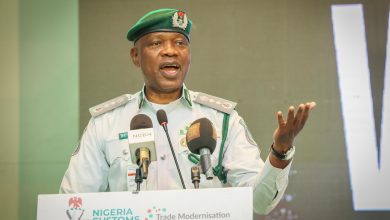
Responding to the issues raised, the Public Relations Officer of the Lagos Free Trade Zone Command, CSC Abdullahi-Lagos, who stood in for the National Public Relations Officer (NPRO), Deputy Comptroller of Customs Abdullahi Maiwada, described the parley as worthwhile.
He urged journalists to continue working symbiotically with the Service to make their respective jobs easier and more impactful.
National PRO, DC Maiwada reinforced the Service’s commitment to training and capacity development, describing it as a priority in the coming year.
He assured journalists that impactful training programmes would be pursued, noting that effective information dissemination requires well-informed practitioners.
He also advised public relations officers to apply emotional intelligence in their dealings with journalists, stressing the importance of separating personal feelings from official responsibilities.
Acknowledging that PR officers are human and not infallible, the NPRO reaffirmed the Service’s resolve to deliver better communication, improved engagement and more professional service in line with the values of the Nigeria Customs Service.