Fuel Tanker Scare on Ilaro Hill: A Warning We Must Not Ignore
Fuel Tanker Scare on Ilaro Hill: A Warning We Must Not Ignore
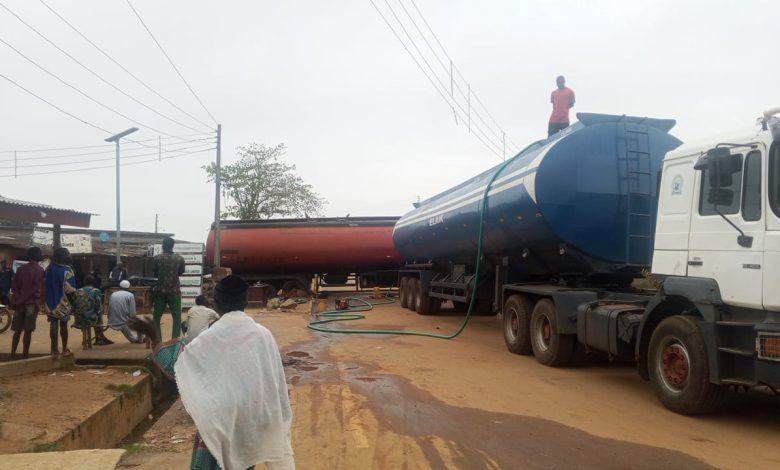
In the early hours of Monday, around 2 a.m., Ilaro was jolted by an incident that could easily have turned into a tragedy of national headlines. A fuel tanker, heavily laden and attempting to climb the steep Gbogidi–Orita hill, lost momentum mid-ascent. In a terrifying twist, the vehicle began to roll backwards. Before it could be brought under control, the tanker skidded and sprawled across the road, blocking passage and placing lives, homes, and businesses in imminent danger.
It was a scene that could have ended in flames. With thousands of litres of highly inflammable fuel in the belly of the tanker, even a single spark might have turned the entire neighborhood into a fireball.
Thankfully, emergency responders acted swiftly. The road was sealed off, traffic diverted, and a transloading operation arranged to carefully transfer the fuel. Their prompt intervention turned what might have been a disaster into a near-miss. But while the town may heave a sigh of relief, this incident leaves behind urgent questions: what if help had come too late? What if the tanker had overturned completely? And what must be done to ensure we do not tempt fate again?
The Case for Urgent Action
This is not the first time a tanker has struggled along Ilaro’s hilly terrain. The steep incline at Gbogidi–Orita is a known hazard, especially for heavily loaded vehicles. Yet little has been done to make the road safer for both drivers and residents.
There are some immediate steps authorities and stakeholders must take:
1. Remove the Speed Breaker on the Hill
Speed breakers may be useful in flat areas to control reckless driving, but on steep inclines, they are death traps. Heavy trucks and tankers lose momentum when forced to slow down, making it nearly impossible to complete the climb. Removing the speed breaker at this dangerous stretch will give tankers a fighting chance to ascend safely.
2. Restrict Tanker Movement to Night Hours
Fuel tankers should be made to ply this route only at night when traffic is lighter. A nighttime restriction significantly lowers the risk of catastrophic collisions with passenger buses, motorcycles, and schoolchildren during the day.
3. Strict Vehicle Fitness Checks
Tankers climbing steep roads must be in top mechanical condition. Brakes, tyres, and engines must be inspected and certified. Allowing a weak or faulty tanker to climb such a hill is an invitation to disaster.
4. Community Alert Systems and Safety Preparedness
Residents along this corridor must be trained on emergency reporting and evacuation procedures. The faster incidents are reported, the quicker responders can move in. Community vigilance is as important as government action.
5. Explore Bypass Alternatives
In the long run, government should explore creating bypass routes for heavy-duty vehicles. Residential areas should not have to live under the constant threat of fuel tankers toppling at their doorsteps.
A Narrow Escape — and a Warning
What happened at 2 a.m. on Ilaro hill should be a wake-up call. It was not just an accident narrowly avoided; it was a warning shot. The lives of residents, the safety of commuters, and the economic lifeline of the community cannot be left to chance.
Ilaro has been spared — this time. But unless urgent corrective measures are taken, the next incident might not end with relief. The danger is real, the risks are high, and the time to act is now.
Charles Abioro
Ordinary farmer